|
Nov 09
|
From First Read to Final Cue: Building a Score Through Trust, Melody, and Collaboration with Composer Grant Fonda
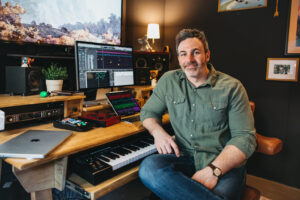
For composer Grant Fonda, every project begins not with notes, but with people. No two workflows are ever the same, because each story reflects the heart and mind of the director behind it. Before writing a single theme, he invests time in understanding the director’s vision, their tastes, creative instincts, and the emotional pulse of their film. Grant is the type of composer who always leaves listeners with memorable melodies. Read on to hear more about Grant’s creative process.
Can you walk us through your typical workflow, from first script read to final cue?
For me, every project, and therefore every process, is unique. I know that might sound cliché, but it’s really true! I believe that every project is an extension of the director–– their tastes, preferences, and in many ways their life– and so it’s important to me that I understand the person behind the storytelling process as much as possible before we dive in. Obviously, some of that gets unlocked as we work together, but a real, honest, collaborative relationship really makes all the difference. That said, every part of the process starts with a conversation about the project, its backstory, and where it’s currently at. We talk about highs and lows, exciting parts and setbacks alike. Once I have a grasp of where the project’s at, I’ll usually ask for a rough cut or a script to get a sense of pacing and tone, and then I’ll put together a playlist of music that’s not my own and inspired by my read or watch for the director. This gives us a chance to talk about what’s resonating (literally!) and what might need refining. I’ll let those conversations marinate for anywhere from a few days to a few weeks, depending on our schedule, and then, once I have a clear idea of where we’re supposed to tonally, I’ll start to sketch ideas.
I’m a melodist at heart, and so these sketches usually start with voice memos of themes or rhythmic ideas that I’ll hum as I’m walking around the house, driving while running errands, etc. If those tiny snippets persist as something memorable over a period of days, I’ll flesh them out into theme or idea suites that then make their way to the director and production team for us to talk about what’s exciting everyone. For me, those early parts of the process are often the hardest but most rewarding because you’re offering something brand new into the world’s creative landscape and hoping that something new moves someone on some level for the very first time. It’s very personal and terrifying and thrilling all at once. But, I’ve found over the years that taking time at the front end of the process to explore and build has always laid a lasting foundation for a creative runway that allows my team and I to thrive in a lightning-fast-paced, ultra-creative world as the score’s being penned.
Once we know where we’re headed, cues begin to take shape. I’ll write to picture and go back and forth with the director and production team, building the emotional house that the film feels like it’s always been meant to live in. Cues are approved, revised as needed (I honestly love the revision process, by the way!), and then sent to orchestration to be prepared for recording with whatever musicians will help define the creative landscape. Once the score’s approved and orchestrated, we’ll often spend time in studios from all over the world to capture performances by the finest musicians available, and then we go into mixing the score. For me, the score mixing process feels akin to glazing a cake or the final firing of a piece of pottery. During this process, I’m able to work with my team to dial in the smallest nuance of a cue before it’s handed off to the dub stage for the final sound mix.
In 31 Candles, there’s a bittersweet refrain in the score based on “You Get What You Want.” How did you discover that tune, and what role does it play in the emotional landscape of the film?
This song by the legendary Irving Berlin was actually discovered by Jonah well before pre-production on the film started. We talked about how the specific lyric could work narratively and how the melody was both timeless and memorable, two things that we always strive for in my own work for Jonah’s films. Like you mentioned, the tune feels almost bittersweet and plays at first in short snippets against the rest of the score in the film until a major turning point where the score and the melody of this song collide in a flurry of emotional fireworks that set the film’s final moments in motion and we are faced with what to do when we’re always “wishing and wanting for something.”
You’ve worked with Jonah Feingold for over a decade. How has that creative relationship evolved, and how did it shape the sonic world of 31 Candles?
Since our very first collaboration, working with Jonah has felt like breathing: effortless and rejuvenating. We first found our creative footing through a shared love of 90’s Disney movies, Hook, magical realism, relationships, and nostalgia, often talking about how things of yesteryear not only inform but often define who we are as both a generation and creatives. By now, it’s no secret that our collaboration initially drew (and still draws) inspiration from the relationship and work between Spielberg and Williams; while this still inspires us today, we’ve built our own language that’s distinctly “romantical.” The sonic world for our movies always tips its hat to the golden age of Hollywood and music while still meeting the listener in a modern idiom, always resulting in a landscape that is always tuneful and magical, intentionally crafted to feel like a friend that you’ve just met but somehow feel like you’ve always known. The score for 31 Candles is by far my most intimate and personal score for our Romanticalverse to date. While the score does at times lean into our shared love for the orchestra with sweeping passages, Jonah and I wanted to be sure to let this score live intimately with Leo and Eva (our leads) in a very personal way that would allow the audience to lean in, so close-mic’ed piano and evocative and exposed timeless melodies presented on solo woodwinds are the emotional hingepins of the score.
Was there a moment in scoring Broken Mary where you felt the music cracked open something emotionally or narratively that hadn’t been there before?
This story was so much about Kevin Matthew’s transformation that I wanted to find a way to craft a score that would allow his past to marry with his current reality. When I scored the opening scene of the film and sent it to Jon Cipiti, he was elated and excitedly talked about how it made the film suddenly feel all at once present and nostalgic, perfect for Kevin’s story. Later on, when Kevin recounts a powerful memory at the cemetery, we lean into traditional liturgical elements used in unconventional ways to evoke a sense of his deeply grounded faith with supernatural elements that intermingled. The production team said the scene suddenly felt rapturous and transportive in a way that they hadn’t imagined possible. Getting to fuse these two sonic worlds throughout the film as the story develops was a rewarding creative challenge.
Do you have a favorite instrument or motif you return to often in your work, and why?
Although it’s not an instrument, I can say that I’m always drawn to melody in my work. Melodies, and particularly those with strategically approached large intervals, have a timeless quality that resonates across demographics and backgrounds and often allows us to remember a particular character or scene in a very human way. Since the earliest days of music, melody has always been a part of the human tradition (lullabies, pop music, madrigals, etc.), and so even if someone doesn’t have a musical background, they’re usually able to sing or hum back at least part of a melody. I also have a background as a percussionist, so I’m often drawn to interesting rhythmic landscapes that feel like they constantly evolve or incorporate unusual found colors. Nearly anything in the world can be used as a percussion instrument, so I find constant inspiration just by doing new things that aren’t inherently musical.
Are there any unconventional sounds or techniques you used in either score that might surprise listeners?
31 Candles features breathtaking flute performances from the wonderful Becky Enloe. Often times, the romantic comedy relies on more “romantic” instruments like the piano, guitar, or strings, but Jonah and I have often been drawn to the hopeful quality of the flute, the magic of a muted trumpet, and the allure of the celeste, and in 31 Candles, the flute becomes almost a character of its own as Leo’s life and sense of hope grows and matures. Broken Mary’s score is driven almost entirely by a sonic landscape that is Kevin Matthews. Most of the featured sonic landscape in the score is built from soundbytes from Kevin’s radio days that my assistant and I transformed into playable instruments that evolve as his story unfolds.
What do you hope audiences feel or remember when they hear your music?
Whether it’s music for media or for the concert stage, I want my audiences to feel something. Music is a language that has the ability to transcend language and demographics, and I believe that if I’ve done my job right, people will be able to better relate to whatever they’ve just seen or heard on a very personal level. And, I always want my audiences to walk away with a sense of hope after hearing my music. The world we live in can often leave us feeling overwhelmed with a sense of darkness and despair, but I want people to remember that there’s always a light that outshines that darkness, and there’s hope to be found.
What’s next for you musically, any new genres, mediums, or collaborators on the horizon?
I just premiered my newest work for Orchestra and Cello (“From Fire, Light”) and am looking forward to recording that with renowned cellist Timothy Loo later this winter. I’m also excited about two new films with my long-time friend and collaborator Jon Cipiti (Broken Mary, The House That Rob Built), one of which premieres in January; I’m currently scoring the other, also set to release in early 2026. I’m finishing up two very different projects with the wonderfully creative and kind Matt Green: a feature featuring a Vangelis-inspired all-synth score, and another project of truly epic proportions. While I can’t say much about the latter until 2026, I can gratefully say that every member of my team has said that it’s been one of the most rewarding and rich projects of their careers, and will feature nearly 100 hours of orchestral music on completion, involving several hundred artists from across the country.