Nov 09

From First Read to Final Cue: Building a Score Through Trust, Melody, and Collaboration with Composer Grant Fonda

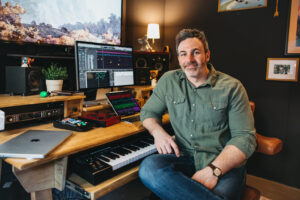
For composer Grant Fonda, every project begins not with notes, but with people. No two workflows are ever the same, because each story reflects the heart and mind of the director behind it. Before writing a single theme, he invests time in understanding the director’s vision, their tastes, creative instincts, and the emotional pulse of their film. Grant is the type of composer who always leaves listeners with memorable melodies. Read on to hear more about Grant’s creative process.

Can you walk us through your typical workflow, from first script read to final cue?

For me, every project, and therefore every process, is unique. I know that might sound cliché, but it’s really true! I believe that every project is an extension of the director–– their tastes, preferences, and in many ways their life– and so it’s important to me that I understand the person behind the storytelling process as much as possible before we dive in. Obviously, some of that gets unlocked as we work together, but a real, honest, collaborative relationship really makes all the difference. That said, every part of the process starts with a conversation about the project, its backstory, and where it’s currently at. We talk about highs and lows, exciting parts and setbacks alike. Once I have a grasp of where the project’s at, I’ll usually ask for a rough cut or a script to get a sense of pacing and tone, and then I’ll put together a playlist of music that’s not my own and inspired by my read or watch for the director. This gives us a chance to talk about what’s resonating (literally!) and what might need refining. I’ll let those conversations marinate for anywhere from a few days to a few weeks, depending on our schedule, and then, once I have a clear idea of where we’re supposed to tonally, I’ll start to sketch ideas.

I’m a melodist at heart, and so these sketches usually start with voice memos of themes or rhythmic ideas that I’ll hum as I’m walking around the house, driving while running errands, etc. If those tiny snippets persist as something memorable over a period of days, I’ll flesh them out into theme or idea suites that then make their way to the director and production team for us to talk about what’s exciting everyone. For me, those early parts of the process are often the hardest but most rewarding because you’re offering something brand new into the world’s creative landscape and hoping that something new moves someone on some level for the very first time. It’s very personal and terrifying and thrilling all at once. But, I’ve found over the years that taking time at the front end of the process to explore and build has always laid a lasting foundation for a creative runway that allows my team and I to thrive in a lightning-fast-paced, ultra-creative world as the score’s being penned.

Once we know where we’re headed, cues begin to take shape. I’ll write to picture and go back and forth with the director and production team, building the emotional house that the film feels like it’s always been meant to live in. Cues are approved, revised as needed (I honestly love the revision process, by the way!), and then sent to orchestration to be prepared for recording with whatever musicians will help define the creative landscape. Once the score’s approved and orchestrated, we’ll often spend time in studios from all over the world to capture performances by the finest musicians available, and then we go into mixing the score. For me, the score mixing process feels akin to glazing a cake or the final firing of a piece of pottery. During this process, I’m able to work with my team to dial in the smallest nuance of a cue before it’s handed off to the dub stage for the final sound mix.

In 31 Candles, there’s a bittersweet refrain in the score based on “You Get What You Want.” How did you discover that tune, and what role does it play in the emotional landscape of the film?

This song by the legendary Irving Berlin was actually discovered by Jonah well before pre-production on the film started. We talked about how the specific lyric could work narratively and how the melody was both timeless and memorable, two things that we always strive for in my own work for Jonah’s films. Like you mentioned, the tune feels almost bittersweet and plays at first in short snippets against the rest of the score in the film until a major turning point where the score and the melody of this song collide in a flurry of emotional fireworks that set the film’s final moments in motion and we are faced with what to do when we’re always “wishing and wanting for something.”

You’ve worked with Jonah Feingold for over a decade. How has that creative relationship evolved, and how did it shape the sonic world of 31 Candles?

Since our very first collaboration, working with Jonah has felt like breathing: effortless and rejuvenating. We first found our creative footing through a shared love of 90’s Disney movies, Hook, magical realism, relationships, and nostalgia, often talking about how things of yesteryear not only inform but often define who we are as both a generation and creatives. By now, it’s no secret that our collaboration initially drew (and still draws) inspiration from the relationship and work between Spielberg and Williams; while this still inspires us today, we’ve built our own language that’s distinctly “romantical.” The sonic world for our movies always tips its hat to the golden age of Hollywood and music while still meeting the listener in a modern idiom, always resulting in a landscape that is always tuneful and magical, intentionally crafted to feel like a friend that you’ve just met but somehow feel like you’ve always known. The score for 31 Candles is by far my most intimate and personal score for our Romanticalverse to date. While the score does at times lean into our shared love for the orchestra with sweeping passages, Jonah and I wanted to be sure to let this score live intimately with Leo and Eva (our leads) in a very personal way that would allow the audience to lean in, so close-mic’ed piano and evocative and exposed timeless melodies presented on solo woodwinds are the emotional hingepins of the score.

Was there a moment in scoring Broken Mary where you felt the music cracked open something emotionally or narratively that hadn’t been there before?

This story was so much about Kevin Matthew’s transformation that I wanted to find a way to craft a score that would allow his past to marry with his current reality. When I scored the opening scene of the film and sent it to Jon Cipiti, he was elated and excitedly talked about how it made the film suddenly feel all at once present and nostalgic, perfect for Kevin’s story. Later on, when Kevin recounts a powerful memory at the cemetery, we lean into traditional liturgical elements used in unconventional ways to evoke a sense of his deeply grounded faith with supernatural elements that intermingled. The production team said the scene suddenly felt rapturous and transportive in a way that they hadn’t imagined possible. Getting to fuse these two sonic worlds throughout the film as the story develops was a rewarding creative challenge.

Do you have a favorite instrument or motif you return to often in your work, and why?

Although it’s not an instrument, I can say that I’m always drawn to melody in my work. Melodies, and particularly those with strategically approached large intervals, have a timeless quality that resonates across demographics and backgrounds and often allows us to remember a particular character or scene in a very human way. Since the earliest days of music, melody has always been a part of the human tradition (lullabies, pop music, madrigals, etc.), and so even if someone doesn’t have a musical background, they’re usually able to sing or hum back at least part of a melody. I also have a background as a percussionist, so I’m often drawn to interesting rhythmic landscapes that feel like they constantly evolve or incorporate unusual found colors. Nearly anything in the world can be used as a percussion instrument, so I find constant inspiration just by doing new things that aren’t inherently musical.

Are there any unconventional sounds or techniques you used in either score that might surprise listeners?

31 Candles features breathtaking flute performances from the wonderful Becky Enloe. Often times, the romantic comedy relies on more “romantic” instruments like the piano, guitar, or strings, but Jonah and I have often been drawn to the hopeful quality of the flute, the magic of a muted trumpet, and the allure of the celeste, and in 31 Candles, the flute becomes almost a character of its own as Leo’s life and sense of hope grows and matures. Broken Mary’s score is driven almost entirely by a sonic landscape that is Kevin Matthews. Most of the featured sonic landscape in the score is built from soundbytes from Kevin’s radio days that my assistant and I transformed into playable instruments that evolve as his story unfolds.

What do you hope audiences feel or remember when they hear your music?

Whether it’s music for media or for the concert stage, I want my audiences to feel something. Music is a language that has the ability to transcend language and demographics, and I believe that if I’ve done my job right, people will be able to better relate to whatever they’ve just seen or heard on a very personal level. And, I always want my audiences to walk away with a sense of hope after hearing my music. The world we live in can often leave us feeling overwhelmed with a sense of darkness and despair, but I want people to remember that there’s always a light that outshines that darkness, and there’s hope to be found.

What’s next for you musically, any new genres, mediums, or collaborators on the horizon?

I just premiered my newest work for Orchestra and Cello (“From Fire, Light”) and am looking forward to recording that with renowned cellist Timothy Loo later this winter. I’m also excited about two new films with my long-time friend and collaborator Jon Cipiti (Broken Mary, The House That Rob Built), one of which premieres in January; I’m currently scoring the other, also set to release in early 2026. I’m finishing up two very different projects with the wonderfully creative and kind Matt Green: a feature featuring a Vangelis-inspired all-synth score, and another project of truly epic proportions. While I can’t say much about the latter until 2026, I can gratefully say that every member of my team has said that it’s been one of the most rewarding and rich projects of their careers, and will feature nearly 100 hours of orchestral music on completion, involving several hundred artists from across the country.

written by admin \\ tags: ,

Jun 02

Bridget Fonda and Danny Elfman Buy Full-On Fixer Next Doorfondaelfman_fp1

By Mark David @YourMamaTweets
BUYERS: Bridget Fonda and Danny Elfman
LOCATION: Los Angeles, Calif.
PRICE: $3.6 million
SIZE: 4,443 square feet, 4 bedrooms, 5 bathrooms

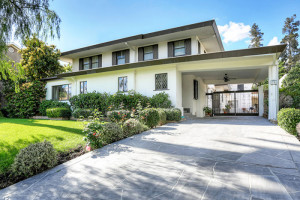
YOUR MAMA’S NOTES: Prolific and in-demand film and television composer Danny Elfman and (presumably) retired actress Bridget Fonda have shelled out $3.6 million, according to both real estate yenta Yolanda Yakketyyak and property records, for a meticulously maintained if comically outdated time capsule of a residence in the historic, guard-gated Fremont Place enclave that’s centrally situated between Hancock Park and Koreatown.

Miz Fonda, born into an illustrious and much-lauded family of actors — she’s Oscar winter Henry Fonda’s granddaughter, two-time Oscar winner Jane Fonda’s niece and twice Oscar-nominated Peter Fonda’s daughter — hasn’t appeared on the small or silver screen since 2002 but before that had a long and admirable career that earned her both Golden Globe and Emmy wins. Mister Elfman, the frontman for the 1980s new wave band Oingo Boingo, has composed theme music and scores for a slew of successful television programs and films including “Pee-wee’s Big Adventure,” “The Simpsons,” “Desperate Housewives,” “Beetlejuice,” “Dick Tracy” and, more recently, “Milk,” “American Hustle,” “Silver Linings Playbook” and “Fifty Shades of Grey.” He currently has about half a dozen projects in some phase of production including the Tim Burton directed “Miss Peregrine’s Home for Peculiar Children” and “Alice Through the Looking Glass” starring Johnny Depp and Helena Bonham Carter, both scheduled to be released next year. Anyways….

Digital listing details indicate the Prairie-style residence sits on a flat, 0.37-acre mid-block lot and was originally built in 1916 with a low-profile hip roof and remarkably deep eaves. The two-story abode currently measures 4,443 square feet with four bedrooms and five bathrooms, per online marketing materials, with additional storage space above the detached two-car garage located behind iron gates at the tail end of a long driveway that passes under a porte cochère as it runs along the side of the house.

From a modern-day stand point the interior spaces are — let’s be honest, children — utterly preposterous, and no doubt the entire property will likely be radically altered and updated for future use so the grim decorative details are somewhat moot. Nonetheless, listing photographs show there are heavily and unfortunately textured plaster ceilings and wall treatments, miles of floral wallpaper and floor tiles of an unknown material throughout the main floor living spaces that appear to this property gossip in listing photos a bit too much like linoleum.

At some point, possibly in the 1960s or 1970s, the interiors were revamped and opened up into a spacious, open-plan living/entertaining space that extends from the front of the house clear through to the back and includes an imposing and arguably salvageable stone fireplace. (The stone detailing around the windows the flank the fireplace, of course, would need be removed.) Toward the back of the space there’s a built-in wet bar with mirror backed shelves and an impossibly ugly carved wood canopy. Integrated cabinetry next to the bar houses an upright piano painted the exact same shade of ecru as the walls and multipaned sliding glass doors open to the backyard where there’s a flagstone terrace surrounded swimming pool and a built-in barbecue station.

A low-tiled peninsula divides the main living/entertaining space from an informal dining space that links to a clean but practically archaic center island kitchen. The most bizarre and decoratively egregious feature in the entire house might be located in the step-down formal dining room that overlooks the frond yard and where the white paneled walls are set off by a brick lined niche fitted with three beer kegs. That’s right, children, there are three beer kegs sticking out of the wall in the dining room. Quite frankly, unless this was a frat house we’re not sure what would be better, if those kegs were purely decorative or if they had actual functioning taps.

We confess we have no inside information on what plans the Fonda-Elfmans might have for the property but it seems unlikely they’ll occupy the house as their primary residence even after an extensive and expensive renovation since they have long lived in a larger, neighboring property of just over three-quarters of an acre with a much more grand and probably far more updated 1920s Italian Renaissance villa that Miz Fonda purchased, according to various online resources, in late 2000 for $2.125 million.

written by admin \\ tags: , ,

Aug 30

Couple Married After Meeting On VH1’s ‘Dating Naked’

ashley-fonda-alika-medeiros

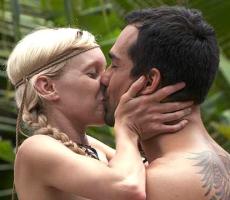
Ashley Fonda and Alika Medeiros tied the knot earlier this month, in what was, naturally, a naked ceremony.

Pop Minute – August 29, 2014

When VH1 first ordered ten episodes of its ‘Dating Naked’ reality series, few expected much to come out of the unusually open way to date.  Now, the series, which features people go on dates in the nude, has its first married couple.

After a date that included naked surfing and conversation, 27-year-old artist Ashley Fonda is married to 36-year-old yoga instructor Alika Medeiros.  “We really deeply connected and he taught me things,” Fonda tells People magazine. “We realized we both have the flower of life tattoo. I told one of the producers, ‘I’m going to marry this man.'”

Since she had already released her fears, Fonda even opted for a naked wedding.  “We undressed for the ceremony!” says Fonda. “As a little girl, I definitely didn’t picture having a naked wedding, but this was such a liberating experience.”

Another contestant, Jessie Nizewitz, sued the VH1 show earlier this week after an unblurred shot of her aired on the series.

‘Dating Naked’ Cast Members Wed. Marriage A Publicity Stunt For VH1 Series?

Kpopstarz.com – August 29, 2014 – by Toby Robboy

Reality TV dating shows are infamous for their general failure to set up successful relationships, but it looks like the newest kid on the block, VH1’s Dating Naked, has already managed to beat the odds and send one couple down the aisle. Participants Ashley Fonda and Alika Medeiros tied the knot earlier this month, in what was, naturally, a naked ceremony. The Wedding was filmed to be aired on the VH1 in September, raising the question; is this all a publicity stunt to generate viewership for the network’s newest franchise?

The couple met during the filming of their first date in May. For the episode, they went on a naked surfing adventure, and apparently really hit it off. Fonda says of the experience, “We deeply connected and he taught me things,” adding that “we realized we both have the flower of life tattoo,” and that she “told one of the producers ‘I’m going to marry this man.’ ”

The couple wed on August 6, in a ceremony officiated by a shaman. Before stripping down, the blushing bride walked the aisle in a custom Nicholas Anthony gown.  Neither the bride’s nor the groom’s family attended the the ceremony, which will air on September 18.

Both the rapid pace at which the couple went from first date to wedding bells, and the presence of a camera crew make it impossible not to question whether this whole thing just a clever PR move. VH1 has already come under fire for the series – they are being sued by contestant Jessie Nizewitz after accidentally airing an uncensored shot of her vagina. True, all publicity is good publicity for reality TV, but maybe the producers wanted to convince viewers that they can facilitate true love, and not just scandal. Or maybe they wanted to convince potential future participants to give the show a try. Fonda, for her part, denies that any such scheme is taking place: “I’m truly in love with Alika,” she insists, “I’m so excited to see where this relationship goes and grows.”

written by admin \\ tags: , ,

Nov 27

Fonda – Better Days (Album Review)

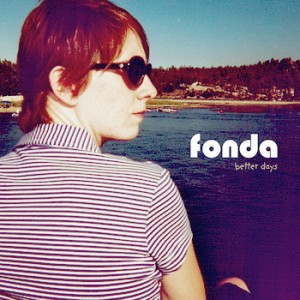
Thanks to their dead-on instincts for engaging melodies and their heavy My Bloody Valentine influences, Better Days is a focused set of lush, dreamy pop.

In the eight years between Catching up to the Future and Fonda’s new EP, Better Days, the band’s principal songwriting duo, Emily Cook and David Klotz, have devoted their energies to some truly questionable projects: Cook contributed to the screenplay of the execrable Gnomeo & Juliet, while Klotz is the music editor for the ongoing pop-culture nightmare that is Glee. Egregious and eyebrow-raising though those credits may be, Cook and Klotz’s work here is characterized by relatively good taste. Thanks to their dead-on instincts for engaging melodies and their heavy My Bloody Valentine influences, Better Days is a focused set of lush, dreamy pop.

The massive power chords and thundering percussion line of the title track open the EP on something of a Coldplay note, but a heavily distorted lead guitar line quickly kicks in and the song’s melody takes a minor-key turn, recasting the song as an effective and on-point homage to early-’90s shoegaze. Cook and Klotz sing lead in unison on “A Love That Won’t Let You Go,” and they use off-kilter, slightly discordant harmonies to bring a real sense of tension to the track. While that approach to arrangements might not be novel (Fonda is hardly the first act to draw heavily from the Jesus and Mary Chain), it’s something they make effective use of over the course of Better Days, allowing their deliberate aesthetic choices to play as big a role as their lyrics and performances in creating the EP’s tone.

In the eight years between Catching up to the Future and Fonda's new EP, Better Days, the band's principal songwriting duo, Emily Cook and David Klotz, have devoted their energies to some truly questionable projects: Cook contributed to the screenplay of the execrable Gnomeo & Juliet, while Klotz is the music editor for the ongoing pop-culture nightmare that is Glee.

To that end, Fonda absolutely makes the most of Better Days’s scant running time. Even with the new track, “Some Things Aren’t Worth Knowing,” added to the set for this new rerelease, the EP doesn’t even scratch a full 20 minutes. None of the songs ever threaten to overstay their welcome (“In the Coach Station Light” is an unabashedly lovely two minutes), and there’s something to be said for the degree of precision Fonda brings to their songwriting, especially on the riotous, punk-inflected standout “My Heart Is Dancing.” That said, even in a market that’s increasingly singles-driven, the sheer brevity of Better Days casts the EP as more of a teaser for a bigger project than as a standalone release.

Other links: Youtube, Fondamusic, Bandcamp

written by admin \\ tags: , ,

Oct 22

Blane Fonda – 10.03.11

Interviewed by: Jenny Tate (10/11/11)
The following is a mini interview of generic questions that we posed to all bands that wanted to answer:

Blane Fonda (Questions answered by Matthew Witt)

www.blanefonda.com
www.facebook.com/BlaneFondaMusic
www.twitter.com/BlaneFonda

1. How did you get your band name?
Blane Fonda is a pen name that our singer used back in his college years. He would post pics and comments about his old band under the name. The band never knew it was him, and they believed Blane Fonda was a super fan of the band.

2. How did this band get started?
Blane Fonda was formed from the instrumental members of The Sapiens and the singer from Technicolor Stallion. The Sapiens needed a new singer and they found Mark (singer) on Craigslist. From there Blane Fonda was born.

3. What bands are you influenced by?
Pink Floyd, Radiohead, Muse, ELO, The Killers, Tears for Fears, Flaming Lips, The Cure, The National, Chet Baker, this list can go on forever.

4. If you could tour with any bands, past or present, who would they be and why?
The Rolling Stones back in the 70’s. The Stones are the definition of a rock band. Their music is timeless, and they are definitely known to party hard. It would be exciting to play in a era when music was raw and the corporate world wasn’t running the music industry.

5. Best food to eat on tour?
We are fortunate to have a food coach in the band (Dave the bassist). He prefers for us to split a chicken sandwich before a show with Miller High Life, and on the road we eat Sunflower seeds (ranch flavor) and drink Gatorade.

6. Why should people listen to your band?
We are a fun band with clever lyrics and catchy hooks. Our music is melodic and energetic. Your dads will love us and your 12-year-old niece will too!

8. If you won a Grammy, who would you thank?
Parents, Family, and Friends!

9. If you could change something about the music industry, what would it be?
I think the radio industry needs to change. Radio is monopolized by the corporate world. It seems that you have 5 stations playing the same 20 cookie cutter songs all day long. There is no variety anymore, and it’s almost impossible to hear something fresh. Internet radio has become popular because of its variety. It should be easier for bands to get their songs played on their local stations, which seems impossible today.

10. Memorable tour experience?
Playing at the ES Jungle in Indianapolis. Our second show at the venue, we had fans singing lyrics to all our songs. Stage diving and crowd surfing was happening all around us. It was a surreal moment – it felt like we were in a staged music video. The energy in the venue was explosive. It’s moments like this that makes being a musician worth all the hassle.

11. What does AP.net mean to you?

AP.net means a lot to bands like Blane Fonda who are DIY. You give us a opportunity to get our name and songs out to people who would have ever heard us. In today’s music scene, it’s hard to get credible acknowledgment if you don’t have professional representation. AP.net definitely helps out the DIY scene.

12. What is your favorite song to play?
“Cucccurucucu” by Franco Battiato. It’s an Italian pop song that we were asked to play for a fashion show. We don’t speak Italian so we don’t know what we’re saying, but it’s one catchy tune.

13. What is your vacation spot of choice?
Maui, Hawaii.

14. What music reminds you of your childhood?
Grunge music: Specifically Nirvana “Smells Like Teen Spirit.” It was the anthem song during middle school – every garage band was covering it.

15. If you could have any super power, what would it be? Why?
To fly at super sonic speeds, so I never have to be stuck in traffic or buy a plane ticket.

16. Any pre-show superstitions or rituals?
Eat half of a chicken sandwich and pound a Miller High Life down. And if I have enough money, a shot of Jameson.

17. What is something that most fans don’t know about you?
I used to kill mosquitos for a summer job.

18. What is your assessment of the current state of radio? Do you think it’s a place where your band could flourish?
Radio is pretty stagnant right now. I do not listen to it much, because the same 20 tunes are played on it. The corporate world has monopolized the radio stations and force them to play the same cookie cutter songs. I do give props to 93.1 WXRT in Chicago for breaking the mold. They play a large variety of music that keeps me listening. If Blane Fonda could get their tunes on radio, we could definitely flourish from it. People still listen to radio, and if we could reach them through radio, it could only help us draw a larger fan base.

19. What do you like to do in your spare time?
In my spare time I fish for musky.

20. What kind of hidden talents do you have?
I can blow bubbles off my tongue.

written by admin \\ tags: , ,