Jan 06

Published by Abe Goldstien on December 2, 2025

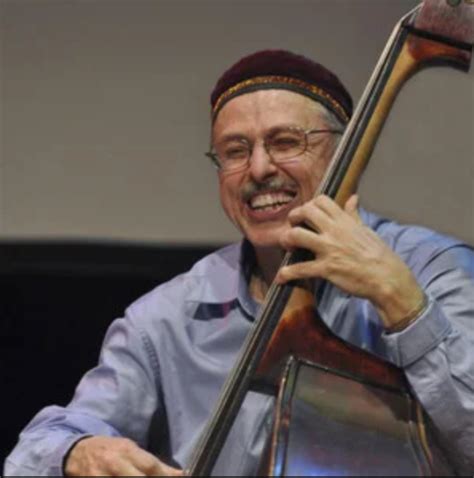
Much like his bass playing and compositions, Joe Fonda’s recent autobiography, My Life in the World of Music, is straight-forward and compelling. It chronicles the journey of a young electric bassist infatuated with the rock, R&B and blues of the late 1960s and early 1970s to a mature acoustic bassist being named one of the five “Musicians of the Year 2022” by the New York City Jazz Record.

Fonda admits in the opening sentence of his story that at a very young age he had a passion and longing to be part of this thing called music. Although the genre of music he gravitated to in his early years emulating the sound of Gerry and the Pacemakers may have changed, Fonda’s passion for the music has remained steady and strong throughout more than five decades of performing and recording.

That passion was there in 1973 when he entered Berklee College of Music not knowing where the journey might take him. It was there when he was totally transfixed and transformed after hearing Deodata’s 2001; Space Odyssey as well as his first exposure to the music of Ornette Coleman’s Free Jazz in 1974. The passion for modern jazz became stronger as he experienced the music of Pharoah Sanders, McCoy Tyner, Sam Rivers, Charles Mingus and others firsthand in Boston clubs.

Meeting folks such as Wadada Leo Smith and Bobby Naughton at the Creative Musicians Improvisers Forum only intensified his curiosity and interest in the art of free improvisation. He refined that passion in rehearsal spaces, stages and recording studios with musical partners such as Michael Jefry Stevens, Harvey Sorgen, Mark Whitecage, Herb Robertson and a long list of other modern jazz artists.

More recently, Fonda’s passion led him to be a member of some of today’s more forward-thinking and playing ensembles including Barry Altschul’s 3Dom Factor, Remedy (with Thomas Heberer and Joe Hertenstein), Origin (with Christophe Rocher and Harvey Sorgen) and Bass of Operation (with Michael Rabinowitz, Jeff Lederer and Harvey Sorgen).

Joe Fonda: My Life in the World of Music shares these stories and more about a musician who longed to be part of this thing called music and will continue to be a definitive voice in it. That passion is best expressed in the closing line of his book — stay tuned.

Joe Fonda: My Life in the World of Music is available on Amazon at https://www.amazon.com/Life-World-Music-Mr-Fonda/dp/B0FSGJZTWY

BOTTOM LINE: Congratulations to bassist Joe Fonda for sharing his life and career in Joe Fonda: My Life in the World of Music. Like his playing and compositions, his autobiography is straight-forward and compelling. Readers will enjoy learning about his journey “to be part of this thing called music.”

Also see: joefonda.com, jazzhalo.be

written by admin \\ tags: , , ,

Nov 09

From First Read to Final Cue: Building a Score Through Trust, Melody, and Collaboration with Composer Grant Fonda

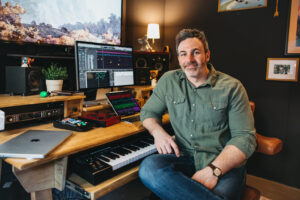
For composer Grant Fonda, every project begins not with notes, but with people. No two workflows are ever the same, because each story reflects the heart and mind of the director behind it. Before writing a single theme, he invests time in understanding the director’s vision, their tastes, creative instincts, and the emotional pulse of their film. Grant is the type of composer who always leaves listeners with memorable melodies. Read on to hear more about Grant’s creative process.

Can you walk us through your typical workflow, from first script read to final cue?

For me, every project, and therefore every process, is unique. I know that might sound cliché, but it’s really true! I believe that every project is an extension of the director–– their tastes, preferences, and in many ways their life– and so it’s important to me that I understand the person behind the storytelling process as much as possible before we dive in. Obviously, some of that gets unlocked as we work together, but a real, honest, collaborative relationship really makes all the difference. That said, every part of the process starts with a conversation about the project, its backstory, and where it’s currently at. We talk about highs and lows, exciting parts and setbacks alike. Once I have a grasp of where the project’s at, I’ll usually ask for a rough cut or a script to get a sense of pacing and tone, and then I’ll put together a playlist of music that’s not my own and inspired by my read or watch for the director. This gives us a chance to talk about what’s resonating (literally!) and what might need refining. I’ll let those conversations marinate for anywhere from a few days to a few weeks, depending on our schedule, and then, once I have a clear idea of where we’re supposed to tonally, I’ll start to sketch ideas.

I’m a melodist at heart, and so these sketches usually start with voice memos of themes or rhythmic ideas that I’ll hum as I’m walking around the house, driving while running errands, etc. If those tiny snippets persist as something memorable over a period of days, I’ll flesh them out into theme or idea suites that then make their way to the director and production team for us to talk about what’s exciting everyone. For me, those early parts of the process are often the hardest but most rewarding because you’re offering something brand new into the world’s creative landscape and hoping that something new moves someone on some level for the very first time. It’s very personal and terrifying and thrilling all at once. But, I’ve found over the years that taking time at the front end of the process to explore and build has always laid a lasting foundation for a creative runway that allows my team and I to thrive in a lightning-fast-paced, ultra-creative world as the score’s being penned.

Once we know where we’re headed, cues begin to take shape. I’ll write to picture and go back and forth with the director and production team, building the emotional house that the film feels like it’s always been meant to live in. Cues are approved, revised as needed (I honestly love the revision process, by the way!), and then sent to orchestration to be prepared for recording with whatever musicians will help define the creative landscape. Once the score’s approved and orchestrated, we’ll often spend time in studios from all over the world to capture performances by the finest musicians available, and then we go into mixing the score. For me, the score mixing process feels akin to glazing a cake or the final firing of a piece of pottery. During this process, I’m able to work with my team to dial in the smallest nuance of a cue before it’s handed off to the dub stage for the final sound mix.

In 31 Candles, there’s a bittersweet refrain in the score based on “You Get What You Want.” How did you discover that tune, and what role does it play in the emotional landscape of the film?

This song by the legendary Irving Berlin was actually discovered by Jonah well before pre-production on the film started. We talked about how the specific lyric could work narratively and how the melody was both timeless and memorable, two things that we always strive for in my own work for Jonah’s films. Like you mentioned, the tune feels almost bittersweet and plays at first in short snippets against the rest of the score in the film until a major turning point where the score and the melody of this song collide in a flurry of emotional fireworks that set the film’s final moments in motion and we are faced with what to do when we’re always “wishing and wanting for something.”

You’ve worked with Jonah Feingold for over a decade. How has that creative relationship evolved, and how did it shape the sonic world of 31 Candles?

Since our very first collaboration, working with Jonah has felt like breathing: effortless and rejuvenating. We first found our creative footing through a shared love of 90’s Disney movies, Hook, magical realism, relationships, and nostalgia, often talking about how things of yesteryear not only inform but often define who we are as both a generation and creatives. By now, it’s no secret that our collaboration initially drew (and still draws) inspiration from the relationship and work between Spielberg and Williams; while this still inspires us today, we’ve built our own language that’s distinctly “romantical.” The sonic world for our movies always tips its hat to the golden age of Hollywood and music while still meeting the listener in a modern idiom, always resulting in a landscape that is always tuneful and magical, intentionally crafted to feel like a friend that you’ve just met but somehow feel like you’ve always known. The score for 31 Candles is by far my most intimate and personal score for our Romanticalverse to date. While the score does at times lean into our shared love for the orchestra with sweeping passages, Jonah and I wanted to be sure to let this score live intimately with Leo and Eva (our leads) in a very personal way that would allow the audience to lean in, so close-mic’ed piano and evocative and exposed timeless melodies presented on solo woodwinds are the emotional hingepins of the score.

Was there a moment in scoring Broken Mary where you felt the music cracked open something emotionally or narratively that hadn’t been there before?

This story was so much about Kevin Matthew’s transformation that I wanted to find a way to craft a score that would allow his past to marry with his current reality. When I scored the opening scene of the film and sent it to Jon Cipiti, he was elated and excitedly talked about how it made the film suddenly feel all at once present and nostalgic, perfect for Kevin’s story. Later on, when Kevin recounts a powerful memory at the cemetery, we lean into traditional liturgical elements used in unconventional ways to evoke a sense of his deeply grounded faith with supernatural elements that intermingled. The production team said the scene suddenly felt rapturous and transportive in a way that they hadn’t imagined possible. Getting to fuse these two sonic worlds throughout the film as the story develops was a rewarding creative challenge.

Do you have a favorite instrument or motif you return to often in your work, and why?

Although it’s not an instrument, I can say that I’m always drawn to melody in my work. Melodies, and particularly those with strategically approached large intervals, have a timeless quality that resonates across demographics and backgrounds and often allows us to remember a particular character or scene in a very human way. Since the earliest days of music, melody has always been a part of the human tradition (lullabies, pop music, madrigals, etc.), and so even if someone doesn’t have a musical background, they’re usually able to sing or hum back at least part of a melody. I also have a background as a percussionist, so I’m often drawn to interesting rhythmic landscapes that feel like they constantly evolve or incorporate unusual found colors. Nearly anything in the world can be used as a percussion instrument, so I find constant inspiration just by doing new things that aren’t inherently musical.

Are there any unconventional sounds or techniques you used in either score that might surprise listeners?

31 Candles features breathtaking flute performances from the wonderful Becky Enloe. Often times, the romantic comedy relies on more “romantic” instruments like the piano, guitar, or strings, but Jonah and I have often been drawn to the hopeful quality of the flute, the magic of a muted trumpet, and the allure of the celeste, and in 31 Candles, the flute becomes almost a character of its own as Leo’s life and sense of hope grows and matures. Broken Mary’s score is driven almost entirely by a sonic landscape that is Kevin Matthews. Most of the featured sonic landscape in the score is built from soundbytes from Kevin’s radio days that my assistant and I transformed into playable instruments that evolve as his story unfolds.

What do you hope audiences feel or remember when they hear your music?

Whether it’s music for media or for the concert stage, I want my audiences to feel something. Music is a language that has the ability to transcend language and demographics, and I believe that if I’ve done my job right, people will be able to better relate to whatever they’ve just seen or heard on a very personal level. And, I always want my audiences to walk away with a sense of hope after hearing my music. The world we live in can often leave us feeling overwhelmed with a sense of darkness and despair, but I want people to remember that there’s always a light that outshines that darkness, and there’s hope to be found.

What’s next for you musically, any new genres, mediums, or collaborators on the horizon?

I just premiered my newest work for Orchestra and Cello (“From Fire, Light”) and am looking forward to recording that with renowned cellist Timothy Loo later this winter. I’m also excited about two new films with my long-time friend and collaborator Jon Cipiti (Broken Mary, The House That Rob Built), one of which premieres in January; I’m currently scoring the other, also set to release in early 2026. I’m finishing up two very different projects with the wonderfully creative and kind Matt Green: a feature featuring a Vangelis-inspired all-synth score, and another project of truly epic proportions. While I can’t say much about the latter until 2026, I can gratefully say that every member of my team has said that it’s been one of the most rewarding and rich projects of their careers, and will feature nearly 100 hours of orchestral music on completion, involving several hundred artists from across the country.

written by admin \\ tags: ,

Apr 22
Fonda’s Daughter is a place to honor the legacy of my dad, Fulvio Fonda— the man who gave me my love for all things vintage. He has always had a way of making magic out of the mundane—of making me feel as though there is adventure around every corner.

West Kauaʻi, Where Locals Preserve the Island’s Soul
by Bianca Wagner·April 21, 2025

Fonda’s Daughter (Retail)

Natalie Fonda and Kekoa Seward, founders of the vintage shop Fonda’s Daughter, value the sincere feel of Hanapēpē and strive to preserve the town’s character while contributing meaningfully to the community.

Nestled next to Hanapēpē’s Hawaiian Congregational Church, Fonda’s Daughter co-founders Natalie Fonda and her husband Kekoa Seward have opened a Hawaiiana vintage store that feels like stepping back in time. The extensive curation put into this collection of items — from mu’umu’u to aloha shirts to old music records — is so clearly a labor of love, one can’t help but be drawn in by what Fonda describes as an “organized treasure hunt.” At Fonda’s Daughter, Fonda and Seward specialize in showcasing and preserving vintage pieces, often rescuing items that might otherwise be thrown away, ensuring that a piece of history lives on.

Growing up on O‘ahu, in the windward community of Ka‘a‘awa in the 1990s, Fonda was raised with the love of all things vintage. Her father, Fulvio Fonda, moved their family to Hawai‘i from the Bay Area in her early childhood. Being raised by a vintage dealer with a passion for aloha shirts meant that as a little girl she would tag along every weekend to the Aloha Stadium swap meet, a formative experience that shaped her deep connection to vintage Hawaiiana culture and inspired the shop’s name, Fonda’s Daughter. As an adult, Fonda continues to travel to O‘ahu every Sunday, joining her father to search for exciting finds in a ritual that demonstrates the intergenerational labor of love that underlies the heart of the shop’s endeavor.

Scattered around the little shop, one will find handwritten signs that designate each rack with the item’s name in ‘ōlelo Hawai‘i, a handmade touch from Seward’s mother, who can often be found lei-making out front on Hanapēpē Friday Art Nights, to imbue the space with a sense of Hawaiian identity. “Any opportunity we have to teach visitors the history and culture, it’s important,” Fonda says. “I think we have a responsibility to do that. I wasn’t born here, but I was raised here from the time I was 5-years-old and my husband’s family goes back generations. My daughter is part-Hawaiian. I believe we have a duty to teach her the history as well.”

For visitors, the shop provides an opportunity to move beyond surface-level experiences of Hawai‘i. Fonda and Seward encourage tourists to immerse themselves, learn about local perspectives, and connect with the island’s true essence. For locals, it’s a nostalgic dive into our recent past, delighting local customers young and old who find beautifully maintained vintage mu‘umu‘u or a graphic T-shirt that reminds them of the one their uncle used to wear. Fonda is committed to keeping prices reasonable so locals can continue to shop hvere. “I know the history and the story that comes with a mu’u mu’u or an aloha shirt,’ she says. “Everything has a memory behind it and I think that’s most important. Sometimes I have people coming in and saying, ‘Oh I wish I had saved a bunch of my grandma’s things,’ and seeing their faces light up when they pull an item and go, ‘Oh my gosh, I see my grandma or my grandpa in this…’ They bring so many good memories with them.”

The Hawaiiana vintage store feels like stepping back in time, extensively curated with muʻumuʻu, aloha shirts, and unique collectibles like old-school pogs and pins.

written by admin \\ tags: ,

Nov 12
Merry Little Christmas On A Budget: Give Kids And Loved Ones Memorable Holidays Without Busting Your Budget.

Christmas On A Budget: What To Do If Your Kid’s Favorite Toy Is Sold Out

If you’ve seen the film Jingle All The Way with Arnold Schwarzenegger then you know that this can become an emotionally charged and very vexing problem. What you don’t know is that there are simple solutions that leave everybody cool and collected.

By: WordCraft Club

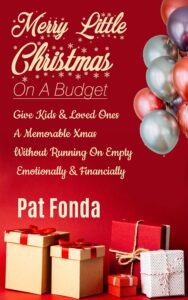
WEST PALM BEACH, Fla. – Nov. 10, 2024 – PRLog — Pat Fonda, author of titles like Supercommunicator Spouses, Storyteller Mom/Dad and Gaming Addiction In Children is pleased to announce an important update to her Kindle book, Merry Little Christmas On A Budget: Give Kids And Loved Ones Memorable Holidays Without Running On Empty Emotionally Or Financially.

A new chapter has been added that helps parents and gift-givers, who may find themselves in the same quandary as Arnold Schwarzenegger’s character in Jingle All The Way, worm themselves out of the fix – without the toy, it has to be said; but they will enjoy the respect and admiration of their kids for being resourceful… and living up to their promises!

How stories can help develop your child’s emotional intelligence. Experts say that “How you do life is how your child will do life.”

“It’s hard to disappoint a child when they have their heart set on something,” says Pat Fonda. “And this is where parents get ensnared. They forget that a kid’s desires are extremely malleable – the younger, the more malleable!”

If you’ve been with kids 3-7 years or so in an ice-cream joint, maybe you can relate: one second she was sure she’ll take the pink scone with frothy white top, and the next few seconds she shouts out, “No; I’ll take the white scone with the frothy pink top!”

Don’t take this literally – but we guess you get the point.

Lean more here: https://www.patfonda.com/2024/11/merry-little-xmas-on-budget-concise.html

The thing is, according to Pat Fonda: “It’s us the adults who make Christmas hard, not the other way around.”

This new chapter will show parents and gift-givers that they have options – seven to be exact – how to find wiggle-room without hurting your child’s feelings, or ending the kid’s expectations; or their respect for you; or their trust that you’ll make good on your promises!

With the Christmas shopping frenzy just beginning to heat up parents and gift-givers can save money – and still give their kids great gifts and great holidays – without running on empty emotionally or financially.

Pat Fonda offers a full range of solutions to help you raise happy, resilient kids and robust families over at her website: https://www.patfonda.com

Contact
WordCraft Club
***@patfonda.com

written by admin \\ tags: ,

Oct 01

20 years of the School for Curatorial Studies Venice

Interview with Aurora Fonda of the School for Curatorial Studies Venice
by Alessandra Galletta

The School for Curatorial Studies Venice founded by Aurora Fonda and Sandro Pignotti in 2004 in Venice with the aim of creating an open laboratory for the visual arts and for all professions related to contemporary art. Courtesy School for Curatorial Studies Venice

More than a school for curators, it is now a cultural institution frequented by young people from all over the world who want to participate in the art of exhibiting art. He turns twenty years old School for Curatorial Studies Venice founded by Aurora Fonda and Sandro Pignotti in 2004 in Venice with the aim of creating an open laboratory for the visual arts and for all professions related to contemporary art. The Summer School has also been active since 2015, bringing together participants from all over the world. We retraced 20 years of training with Aurora Fonda in this interview.

Since 2003 you have been the director of the AplusA gallery in Venice, and only a year later you had the idea of ​​founding a curators’ school from scratch. Lack of available professional figures, or desire to implement a new teaching of contemporary art?
It can be said that this need was born in the field, in carrying out my role as director of the gallery, in particular since it is the official home of the Slovenian Pavilion on the occasion of the Biennale. When a gallery transforms into a national pavilion, interesting positions open up for interns, trainees and students who want to experience working in the field.

Offer them an opportunity to learn and have direct discussion with the hot topics of curation, exhibition design, communication…
The boys were all very active, proactive and willing, and complained about the fact that their university studies did not include the practical experiences that would certainly have complemented the theoretical lessons. I felt the sense of their lack, and I thought about how to contribute to the training of future international curators. The more contemporary art can count on trained spokespersons, the stronger and clearer its message will arrive.

The breakfast pavilion, (2017) curated by Luca lo Pinto and the ML-XL studio with the participation of Olaf Nicolai, Nicole Wermers and Anne Sophie Berger. Courtesy School for Curatorial Studies Venice

Where did you start?
Once I realized that in 2004 there were no real courses for curators in Italy – with the exception of a small one in Florence – and that no public institution was offering them, I thought that structuring a real curator course should be born in the private sector.
We started with a first three-week edition which was immediately a great success. The participation was so numerous that we immediately organized a second edition and since then the number of students has always grown.

What aspects of curating do you pay most attention to, what are your privileged experiences?
Already from the first edition of the course it was clear to me that the children not only did not foresee a direct relationship with the artists, but they struggled to find a way of relating with them, because they were unfamiliar with artist studies and consequently with their practice. For my training, however, this is a fundamental aspect, both for the profession of curator and for personal enrichment.

So it can be said that the first supporters of the school were the artists themselves?
Not only that, even later. We started inviting artists and organizing a full calendar of visits to their studios; in this way the program was lengthened from time to time, as we added lessons, meetings, workshops… Fueling the activities in direct collaboration with the artists has definitely made our school grow.

Students visiting the Maramotti collection in Reggio Emilia, 2014. Courtesy School for Curatorial Studies Venice

Has the demand from foreign students also grown over time?
Yes, a lot, and to deal with this demand in a more structured way, since 2015 we have activated the Summer school, a program in English aimed at international students which brings together people from all parts of the world. While with the pandemic we began to offer online courses, which instead of limiting moments of dialogue, discussion and discussion on topics, have contributed to strengthening that sense of community, where everyone feels part of a project.

Another strong point of the school is that a lot of theory is studied… but at a certain point it must be put into practice
After understanding the complex concept of “exhibition”, thanks to the fundamental contribution of the teachers, students are asked to discuss and develop the creation of an exhibition concept. Once the methods and motivations have been approved – expressed in a project already developed at a professional level – we proceed with the choice of the artists, the selection of the works and all the organizational phases are gradually carried out, from transport and insurance up to the preparation of the exhibition and its correct communication.

(continued on webpage)

Also see:

https://www.linkedin.com/in/aurora-fonda-20965821

https://www.curatorialstudiesveniceonline.com/the-tutors-i-docenti/aurora-fonda


written by admin \\ tags: , ,